
How to Know If Desi Ghee Contains Chemicals or Additives
Desi ghee is not just food — it’s emotion. In many homes, it represents purity, tradition, and the taste of “real goodness.” But today, the market is full of brands selling ghee loaded with chemicals, additives, flavors, and artificial colors. So how can you be sure the ghee you are eating is genuinely pure?
In this complete guide, you will learn how to know if desi ghee contains chemicals or additives, how to test purity at home, common fraud tricks, fun facts, and how real ghee behaves in different temperatures.
Let’s begin your journey from “confused buyer” to “ghee detective.” 🕵️♂️🧈
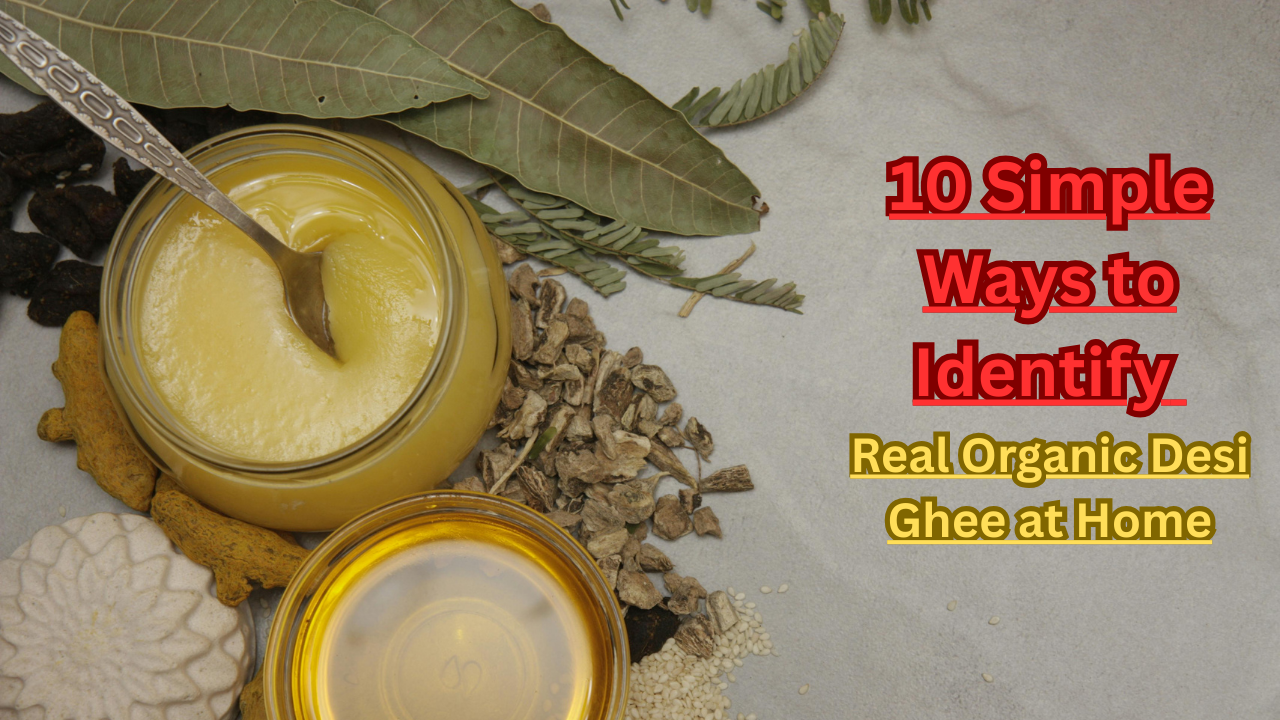
10 Simple Ways to Identify Real Organic Desi Ghee at Home
Why It’s Important to Check If Your Ghee Has Chemicals
Before we learn how to know if desi ghee contains chemicals or additives, let’s understand why adulteration happens:
-
Pure ghee is expensive
-
Fake ghee is cheap to make (mixing oils + flavors)
-
High profit margins for sellers
-
Lack of strict testing in small markets
-
Artificial colors and flavors easily fool buyers
Chemically treated ghee can cause health problems like acidity, skin issues, cholesterol imbalance, and digestion problems.
This makes it essential to know how to know if desi ghee contains chemicals or additives with simple home methods.
H2: 10 Easy Home Tests to Know If Desi Ghee Contains Chemicals or Additives
Below are tried, tested, and safe home experiments that help you detect adulteration.
H3: 1. The Fridge Test (Most Accurate ❄️)
How to do it:
-
Put one teaspoon of ghee in a small bowl.
-
Place it in the refrigerator for 30–40 minutes.
What you’ll see:
| Result | Meaning |
|---|---|
| Ghee freezes uniformly (smooth texture) | ✔️ Pure ghee |
| Ghee freezes in two layers, top soft, bottom hard | ❌ Contains oils or additives |
| Color changes after cooling | ❌ Chemicals added |
This simple test helps you know if desi ghee contains chemicals or additives by checking its freezing behavior.
H3: 2. Heat Test (Smell Test) 🔥
Take a small amount of ghee in a spoon and heat it.
Pure Ghee:
-
Melts quickly
-
Turns dark brown
-
Gives a natural, pleasant nutty aroma
Chemical/Adulterated Ghee:
-
Turns light yellow or white
-
Smells oily, artificial, or strange
-
Doesn’t fully melt
H3: 3. Water Test 💧
-
Add one spoon ghee into a glass of warm water.
-
Stir gently.
Pure Ghee:
-
Settles at the bottom in solid form
Fake Ghee:
-
Floating oily layer
-
Dissolves like cooking oil
This is one of the easiest ways to know if desi ghee contains chemicals or additives.
H3: 4. Palm Rub Test ✋
-
Take a little ghee in your palm.
-
Rub gently for 10–12 seconds.
Pure Ghee:
-
Completely melts due to body heat
-
Smells natural
Artificial Ghee:
-
Stays semi-solid
-
Smells like dalda or oil
H3: 5. Color Check (Visual Test) 👀
Pure ghee should have a golden yellow color when melted.
If it looks too bright, fluorescent, or yellowish like artificial coloring → ❌ It contains additives.
H3: 6. Settling Test (Overnight Test)
Leave one spoon of melted ghee in a bowl overnight.
If it forms layers → adulterated.
Pure ghee stays uniform.
H3: 7. Smoke Test 🚬
Heat ghee in a pan:
-
Pure ghee has a high smoke point (~250°C)
-
Adulterated ghee smokes early like cooking oil
H3: 8. Iodine Test (Scientific DIY) 🧪
-
Mix a little ghee with water
-
Add 2–3 drops of iodine
Blue color = starch = adulteration
H3: 9. Taste Test 😋
Pure ghee tastes:
-
Creamy
-
Nutty
-
Not oily
Fake ghee tastes:
-
Greasy
-
Bitter
-
Artificial
H3: 10. Aroma Test 👃
Pure desi ghee has a signature aroma depending on the milk type.
Chemical ghee smells synthetic or too “buttery.”
H2: Signs Your Ghee Contains Chemicals or Additives
Here’s a quick checklist:
-
Too bright yellow
-
Very thin or very thick texture
-
Foam during heating
-
Bitter or oily aftertaste
-
Strong buttery smell
-
Stays liquid in winter
-
Hardens too much in winter
-
Creates white residue after melting
If your ghee shows 3 or more symptoms, it is likely adulterated.
H2: Most Common Chemicals Added to Ghee (Know the Enemy!)
H3: 1. Hydrogenated Oils (Dalda/Khalis Banaspati)
Makes ghee thick, cheaper, and spreads easily.
Worst for heart health.
H3: 2. Artificial Colors
To make ghee look yellow.
Names include:
-
Metanil Yellow
-
Tartrazine
H3: 3. Essence & Flavors
Gives fake ghee the smell of real ghee.
H3: 4. Preservatives
Increase shelf life but reduce purity.
This is why it’s essential to know how to know if desi ghee contains chemicals or additives.
H2: What Pure Ghee Looks Like in Summer vs Winter
| Season | Behavior of Pure Ghee | Behavior of Fake Ghee |
|---|---|---|
| Summer | Semi-liquid & smooth | Very thin, runny like oil |
| Winter | Thick, grainy | Extremely hard or stays liquid |
| Fridge | Freezes evenly | Separates into layers |
H2: Why Your Brand Matters (Not All Ghee Is Equal)
Pure brands do not need to add:
-
Color
-
Preservatives
-
Artificial aroma
-
Thickening agents
Choose brands that mention:
-
Grass-fed milk
-
No additives
-
Clarified butter only
-
Lab-tested
If you make ghee at home, even better.
H2: Fun Facts About Real Ghee (You’ll Love These!)
-
Ghee never expires if kept properly
-
In ancient India, ghee lamps were used in temples
-
Ghee is considered “liquid gold”
-
Real ghee separates into small grains
-
Pure cow ghee is naturally yellow
-
Pure buffalo ghee is white
H2: How to Store Ghee Properly So It Stays Pure
-
Keep in a glass jar
-
Avoid plastic containers
-
Store away from sunlight
-
Use a dry spoon
-
Do not refrigerate unless necessary
Good storage reduces the need for preservatives, meaning fewer chemicals.
H2: FAQs — Quick Answers You Need
H3: 1. How to know if desi ghee contains chemicals or additives?
By performing fridge, heating, aroma, and water tests. Pure ghee always melts smoothly, freezes uniformly, and smells natural.
H3: 2. Does pure ghee stay hard in winter?
Yes, pure cow ghee thickens in winter but does not become stone-hard.
H3: 3. Why does my ghee smell too strong?
It may contain artificial flavoring or essence.
H3: 4. Can fake ghee harm the body?
Yes, it can cause digestion issues, heart risks, and inflammation.
H3: 5. What color is pure cow ghee?
Golden yellow when melted, not neon yellow.
H2: Final Verdict — Be a Smart Ghee Buyer
Now that you know how to know if desi ghee contains chemicals or additives, you can easily:
-
Test purity at home
-
Identify fake ghee in minutes
-
Protect your family’s health
-
Choose high-quality brands
-
Understand natural behavior of ghee
Pure ghee is a blessing — but only if it’s truly pure.
Use the tests above and trust your senses.